Lizards, Liver Flukes, and Cane Toads: What Florida Cat Owners Should Know
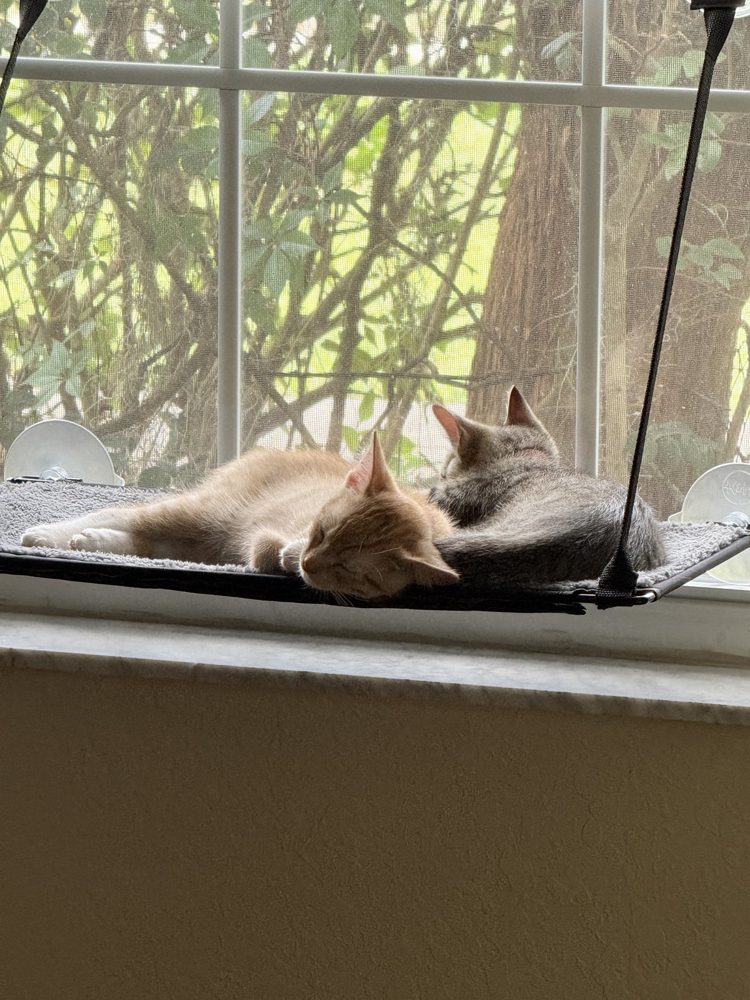
If your Florida cat goes outside, it will hunt lizards, and sooner or later it may meet a toad. Most of those encounters are harmless. Two aren't: a liver fluke that cats pick up from eating lizards, and the invasive cane toad, whose skin toxin can kill a pet. Here's what the veterinary and wildlife sources actually say, and what I'm doing about it at my house.
The short version
- "Lizard poisoning" is really a liver fluke. The parasite is Platynosomum fastosum (also called P. concinnum). Cats get it by eating infected lizards and other small prey. The lizard itself isn't poisonous. [1]
- It's common where cats hunt. Reported infection rates run 15–85% in tropical and subtropical areas, including Florida, and it's most common in cats that are allowed to hunt. [1][2]
- Many infected cats look fine. Heavy or long-running infections can cause serious liver disease. A routine fecal test can miss it, so it's worth asking your vet about. [1][2]
- Cane toads are an emergency. If your cat bites or mouths one, rinse its mouth (front to back, not down the throat) and get to a vet. [5][6]
- Around Ocala, cane toads are less established than in South Florida, but they're not impossible. Learn to tell them from our native southern toad. [5][6]
Why I care: Cleo is a lizard hunter
We have two young cats here in the Ocala area: Felix, our orange boy, and Cleo, our gray tabby girl. Felix stays close and comes when called. Cleo is the explorer. She can be out for up to a couple of hours, and she brings lizards home. That's what sent me looking for this information.
I was surprised that "lizard poisoning" isn't a toxin at all. It's a parasite that takes weeks to show up, if it shows up at all. And the cane toad warnings you hear all over Florida turned out to depend a lot on where in Florida you live.
Full honesty: Cleo hasn't been tested for liver flukes yet, and neither has Felix. Given how many lizards she brings home, it's on my list of questions for our vet the next time we go in. I'll update this page with what I learn, but not with any medical advice.
What the liver fluke is and how cats get it
Platynosomum fastosum is a small fluke, about 4–8 mm long as an adult, that lives in a cat's bile ducts. [1] Its life cycle needs several hosts:
- Fluke eggs pass out in an infected cat's feces.
- Land snails eat the eggs, and the larvae develop inside the snail.
- Pill bugs and sow bugs (terrestrial isopods) take up the larvae, and so can lizards (Anolis species, geckos, skinks) and toads.
- A cat eats one of those animals, and the young flukes migrate to its bile ducts and mature. [1]
That's why the Companion Animal Parasite Council (CAPC) uses the term "lizard poisoning" for the infection, not for anything toxic in the lizard. [1] Peer-reviewed research also lists isopods and lizards (Anolis and Hemidactylus geckos) as the usual sources. [7]
A few reassuring points from CAPC: the fluke isn't passed directly from cat to cat, other pets in the home usually aren't at risk because the parasite needs an intermediate host, and no human health hazard appears to be associated with it. [1]
How common is it in Florida?
CAPC describes P. fastosum as a liver fluke of cats in Florida, other parts of the southeastern U.S., and Hawaii. CAPC reports prevalence of 15–85% in tropical and subtropical environments, most commonly in cats that are allowed to hunt. [1] The Merck Veterinary Manual gives the same range: about 15–85% of cats with access to intermediate hosts in endemic areas. [2]
That range is wide because it comes from different studies in different places. Neither source gives a figure for Marion County or Central Florida specifically.
Signs to watch for (and why many cats show none)
According to Merck, most infected cats stay clinically normal. [2] CAPC notes that cats with few flukes (fewer than about 125) often have no severe signs, and that severity tracks with the number of flukes and how long the infection has lasted. [1]
Signs the sources list include:
- Lethargy, poor appetite, weight loss, a poor coat, low fever [1]
- Vomiting, diarrhea, jaundice (yellow gums, skin, or eyes) [1][3]
- An enlarged or swollen belly [2][3]
Timing matters. Merck says the first signs develop between 7 and 16 weeks after infection, so a cat that ate a lizard today won't look sick tomorrow because of the fluke. [2] Long-running heavy infections can lead to bile-duct damage and liver failure. [1]
Testing and treatment: questions for your vet
This is the part I most want other Florida cat owners to know. The fluke is easy to miss:
- CAPC recommends a fecal sedimentation test, because the eggs are dense and rarely float in the standard flotation test. Several fecal exams may be needed. [1]
- Eggs may not show up at all if the bile ducts are blocked. [1][2]
- Research suggests that typical routine dewormer doses aren't effective against this fluke, and that even higher treatment doses didn't clear every infection in a study of naturally infected cats. [7][8]
I'm deliberately not listing drugs or doses. That's your vet's call. Here's what I'd ask instead:
- "My cat hunts lizards. Should we screen for Platynosomum, and with which fecal test?"
- "Does the dewormer we use cover liver flukes at the dose we're giving?"
- "If we treat, should we retest later?"
Lowering the fluke risk
CAPC's prevention advice is one line: cats shouldn't be allowed to hunt, so they don't eat the intermediate hosts. [1] For an indoor-outdoor cat in Florida, that's easier said than done. Here are the options I'd weigh, in order of how much I think each one helps:
- A catio or screened lanai. Fresh air and sun with far fewer lizards in reach. This is the biggest lever. Catio kits: Habitat Haven (manufacturer site)
- Supervised outdoor time instead of free roaming, especially for a known hunter.
- A contained yard with a cat-proof fence, so outdoor time is predictable. Purrfect Fence (manufacturer site)
- Talk to your vet about screening if your cat already hunts. Prevention isn't perfect.
We don't have a catio or lanai. Our cats get time in a fenced backyard, and I describe that setup in our morning and evening backyard routine.
Cane toads: what they are and why they're dangerous
The cane toad (Rhinella marina, also called the bufo, giant, or marine toad) is a large, nonnative, invasive amphibian in Florida. [5] Glands behind its eyes secrete a milky-white toxin, which FWC calls bufotoxin, that can sicken or kill animals that bite or eat it. [5] Merck calls it the most toxic toad species in the U.S. and notes that serious poisoning generally comes from large toads like this one. [4]
One honest note for cat owners: UF/IFAS says dogs are considerably more likely than cats to try to eat cane toads. [6] Cats can still be poisoned by biting, mouthing, or eating a toad, so it isn't a dogs-only problem. [4]
Are cane toads a problem around Ocala?
Less than in South Florida, based on the official range descriptions, but don't treat that as a guarantee:
- FWC says cane toads are currently found in central and south Florida, generally south of the I-4 corridor. [5] Ocala is north of I-4.
- UF/IFAS describes them as established in much of the southern peninsula as far north as Tampa (as of 2017), with a small established population in DeLand (Volusia County) and isolated sightings in northern Florida that may be escaped or released pets. [6]
- Cane toads are still sold in the pet trade, which is one way they turn up outside their main range. [6]
So in Marion County, a toad in your yard is more likely to be a native southern toad. But a cane toad isn't impossible, and if you travel or move south with your cats, the risk goes up. FWC points to IveGot1.org for a map of credible sightings. [5]
Cane toad or native southern toad?
Don't harm a toad until you're sure. The native southern toad is a beneficial part of Florida's ecosystem. [5]
| Cane toad (invasive) | Southern toad (native) | |
|---|---|---|
| Adult size | Usually 6–9 inches [5] | Max about 3–4 inches (FWC); rarely over 3 inches (UF/IFAS) [5][6] |
| Head ridges (crests) | None above the eyes [5] | Two obvious crests on top of the head [6] |
| Gland behind the eye | Large and triangular, angling down onto the shoulder [5] | Small and oval [5][6] |
| Danger to pets | High [5] | UF/IFAS: "no danger to pets" [6] |
Baby cane toads are about the size of a raisin and are very hard to tell apart from native toadlets. [6]
If your cat bites or licks a toad
Signs listed by FWC, UF/IFAS, and Merck include drooling or foaming at the mouth, pawing at the mouth, head shaking, brick-red gums, frantic or disoriented behavior, trouble breathing, and seizures. [4][5][6]
First aid the sources describe:
- Rinse the mouth from front to back with a hose so the water runs out of the mouth, not down the throat. FWC says to do this for 10 minutes and UF/IFAS says 15. [5][6] Merck adds that the animal shouldn't breathe in spray carrying the toxin. [4]
- Wipe the gums and tongue with a damp cloth. [5][6]
- Call your vet or an emergency vet and go. [5] Follow their instructions over anything on this page.
The ASPCA Animal Poison Control Center is available 24/7 at (888) 426-4435. The ASPCA notes a consultation fee may apply. [9]
Wear gloves if you handle a toad, and wash your hands afterward. The secretions can irritate skin and burn eyes. [5]
Making your yard less toad-friendly
FWC's checklist for keeping cane toads off your property doubles as a decent lizard-and-bug reducer: [5]
- Keep grass cut short.
- Fill holes around structures, and trim the undersides of shrubs.
- Keep branches and rocks off the ground, and clear brush piles and clutter.
- Feed pets indoors, bring food and water bowls in at night, and clean up scraps around grills and outdoor tables.
Two habits I'd add based on the UF/IFAS biology: adult cane toads are nocturnal and come out after sunset, and breeding usually follows heavy rain. [6] Bringing cats in before dark, especially on rainy summer evenings, cuts down on toad encounters.
About removal: FWC says cane toads aren't protected except by anti-cruelty law. They can be humanely killed on private property with the landowner's permission, and captured toads may not be relocated and released. [5] If that's not something you want to do, FWC notes you can hire a wildlife trapper. [5]
My Florida lizard-and-toad checklist
- ☐ Ask the vet about Platynosomum screening (fecal sedimentation) for any cat that hunts lizards.
- ☐ Ask whether our dewormer covers liver flukes at the dose we use.
- ☐ Move outdoor time into a catio, screened lanai, or fenced yard where possible.
- ☐ Bring cats in before dark, especially after rain.
- ☐ No pet food or water bowls left outside overnight.
- ☐ Learn cane toad vs. southern toad ID (size, head crests, gland shape).
- ☐ Save the emergency vet's number and ASPCA Poison Control, (888) 426-4435, in your phone.
- ☐ Keep a garden hose with a gentle nozzle where you can grab it fast.
Sources
All sources were accessed and checked on 2026-10-22.
- Companion Animal Parasite Council (CAPC). Platynosomum fastosum (page last updated Mar 13, 2019).
- Merck Veterinary Manual (Professional). Hepatobiliary Fluke Infection in Small Animals, S. A. Center (last updated Aug 2026).
- Merck Veterinary Manual. Flukes in Small Animals.
- Merck Veterinary Manual. Toad Poisoning in Dogs and Cats, A. Padula (last updated Jul 2026).
- Florida Fish and Wildlife Conservation Commission (FWC). Cane Toad (Rhinella marina).
- UF/IFAS Extension (EDIS WEC387/UW432). Wilson, A., and S. A. Johnson. The Cane or "Bufo" Toad (Rhinella marina) in Florida.
- Peer-reviewed study (open access, PubMed Central). Comparison of fecal analysis methods for the detection of Platynosomum fastosum in naturally infected cats.
- Peer-reviewed study (open access, PubMed Central). Efficacy of Praziquantel in the Treatment of Platynosomum fastosum in Cats with Natural Infections.
- ASPCA. Animal Poison Control.