Morning and Evening Backyard Time for Florida Cats: Our Routine and the Safety Basics
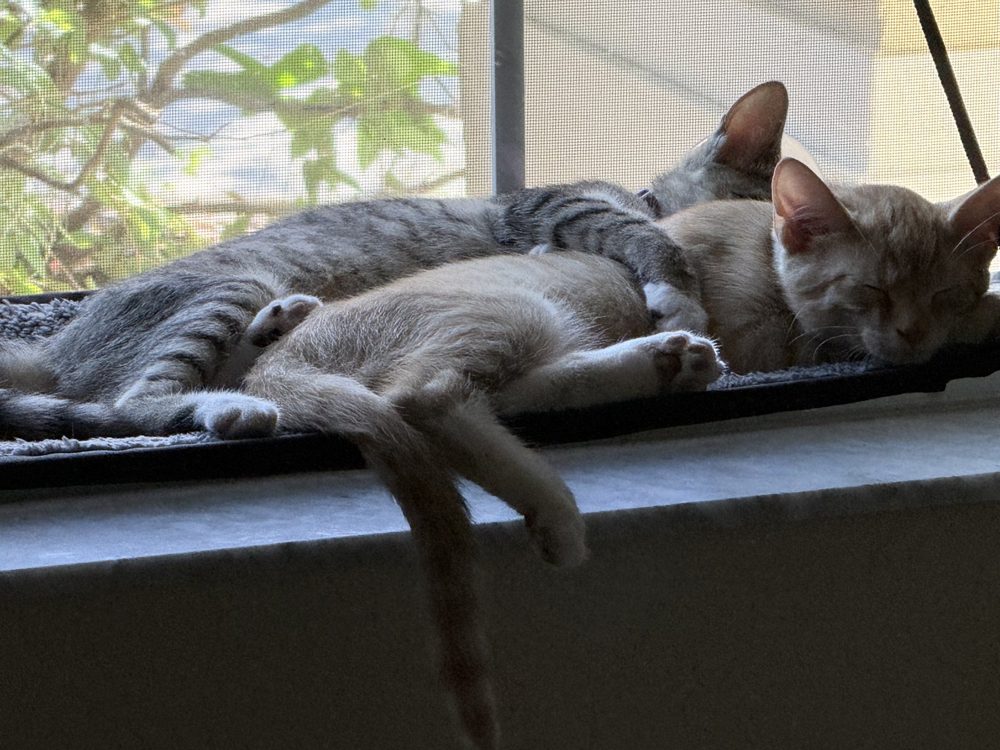
Our cats, Felix and Cleo, get time in our fenced backyard twice a day, once in the morning and once in the evening. Here's our actual routine, what the veterinary and wildlife sources say about the risks of a Florida backyard, and the small changes I'm making because of them.
Our routine
We live in the Ocala area. Our backyard is surrounded by a vinyl privacy fence, roughly 6 to 7 feet tall by my estimate. There's no pool and no lanai, just a regular yard.
- When: around 10:30 AM for about an hour, and again around 6:30 PM for about an hour.
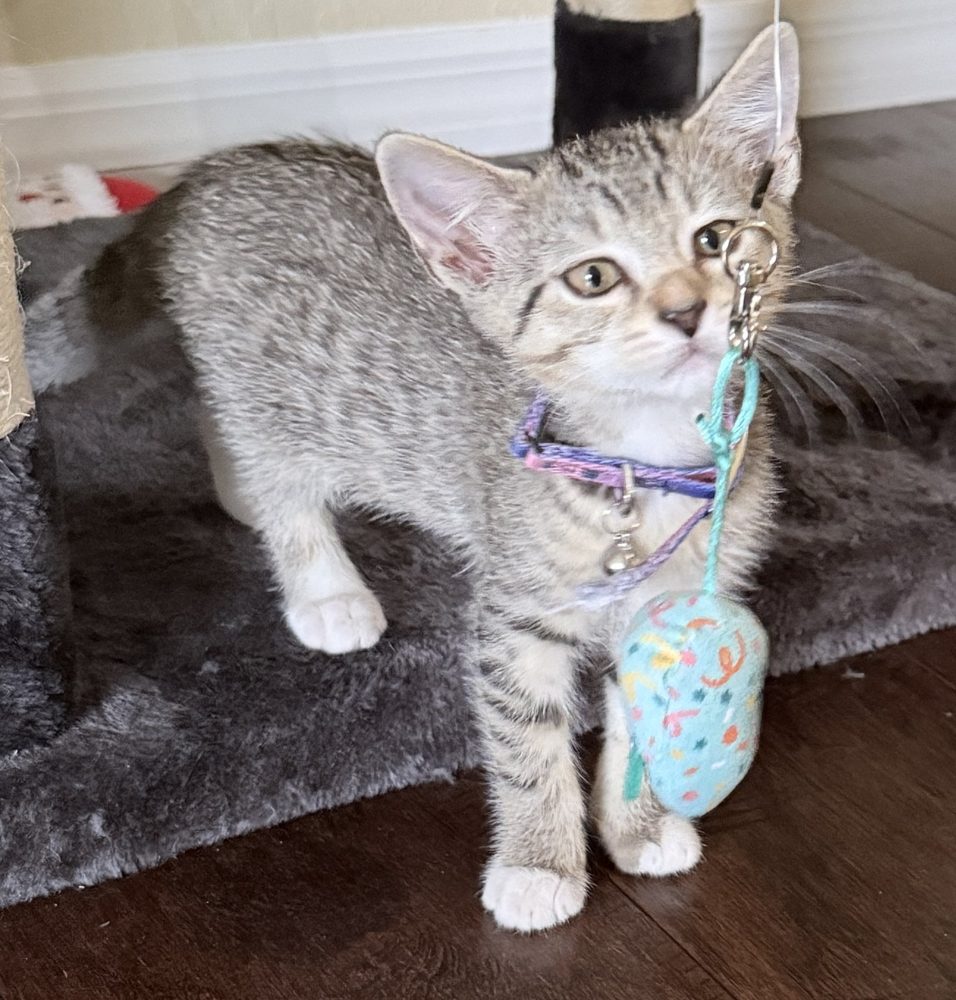
- Who: Felix, our orange boy, and Cleo, our gray tabby. Cleo is the hunter, and she brings lizards home.
- Supervision: I don't stand out there with them. I leave them to roam and play on their own. That's the part of our routine that carries the most risk, so the sections below are honest about what the sources say.
- ID: both cats are microchipped. Cleo wears a breakaway collar. Felix lost his recently (more on that below).
To be upfront about the official position: FWC advises against letting pets free-range, notes that free-ranging cats face risks from wildlife, dogs, cars, and disease, and recommends keeping cats indoors to protect them from coyotes. [4][5] The ASPCA also asks owners to keep cats indoors. [15] We've chosen some outdoor time anyway, and this page is about making that time safer.
Heat: why timing matters in Florida
The ASPCA's hot-weather advice is to give pets fresh water and shade and to keep them indoors when it's extremely hot. [1] Merck notes that hot surfaces like asphalt and sand can burn paws, and that heat is especially risky when pets can't reach shade or a cooler spot. [3]
An honest note about our 10:30 slot: in a Florida summer, mid-morning can already be hot. My reading of the ASPCA and Merck guidance, not a rule from either one, is that in peak summer a shorter session, or an earlier one, makes more sense. On extreme-heat days, skipping it is the easy call. Whatever the time, the cats need shade they can actually reach and water outside. [1]
Know the signs of overheating. The ASPCA lists excessive panting or trouble breathing, a faster heart and breathing rate, drooling, weakness, stupor, and collapse. [1] Merck lists hot skin, vomiting, drooling, rapid panting, distress, uncoordinated movement, collapse, or unconsciousness. [2]
Dawn and dusk are wildlife hours
The cool edges of the day are the busiest ones for the things I worry about most:
- Coyotes. FWC says coyotes have been documented in all 67 Florida counties, that they "can and do prey on domestic cats," and that most coyote attacks on pets happen at night or in the early evening or morning hours (dusk and dawn). [4]
- Cane toads. UF/IFAS says adult cane toads are nocturnal and come out after sunset, and that breeding usually follows heavy rain. [7] FWC places them generally south of the I-4 corridor, so they're less established around Ocala than farther south. [6] More in my lizards, liver flukes, and cane toads guide.
- Owls. FWC says great horned owls may treat small unattended pets as potential prey, and that staying close to your pets outside, especially at night, prevents that kind of encounter. [9]
- Mosquitoes. UF/IFAS says the mosquitoes that carry encephalitis peak around dusk and dawn. [14] Mosquitoes also spread heartworm (more below). [11]
How this fits our routine: the 10:30 AM session is well clear of dawn. The 6:30 PM session is the one that moves with the seasons. In summer it's still daylight, but in fall and winter 6:30 to 7:30 PM is around or after sunset, which puts it right in the dusk window described above. My reading of these sources, not an official rule, is that it makes sense to shift the evening session earlier as the days get shorter, so the cats are in by sunset. I'd be strictest about that on rainy evenings, when toads are out.
Hawks and snakes
Hawks and other raptors. FWC says raptors will dive at people and pets that come within about 150 feet of their nest, and that most small dogs are too heavy for raptors to carry off. Even so, FWC recommends keeping a close eye on pets, even in a fenced yard. [10] I couldn't find an FWC or UF/IFAS figure on how often hawks take cats, so I won't guess.
Snakes. FWC says only six of Florida's 50 snake species are venomous, that most snakes you'll meet are harmless, and that even venomous species aren't particularly dangerous unless they're stepped on or otherwise provoked. [8] FWC's advice for discouraging snakes near the house is to clear brush, lumber, and debris and to clean up rodent food like spilled birdseed and pet-food scraps. [8] If your cat is ever bitten, call your vet right away. Don't try to catch or kill the snake.
Lizards and the liver fluke
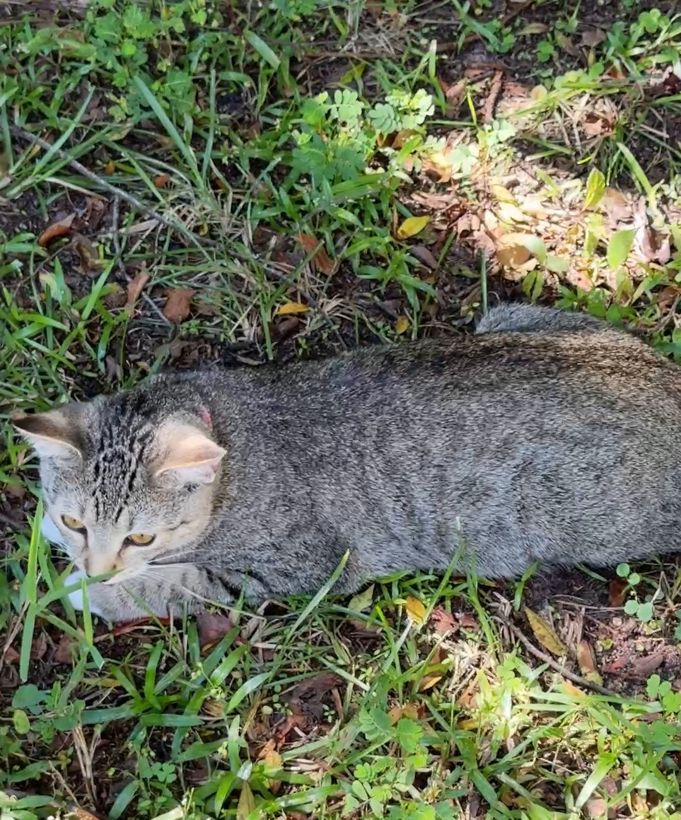
Backyard time is lizard-hunting time for Cleo. CAPC says cats pick up the Platynosomum liver fluke by eating infected lizards and other small prey, and CAPC's prevention advice is not to let cats hunt. [18] Many infected cats show no signs, and routine fecal tests can miss it. I cover this in detail in the lizards, liver flukes, and cane toads guide.
For the record, neither Felix nor Cleo has been tested for liver flukes yet. Given Cleo's hunting habit, it's on my list of questions for our vet.
Fleas, ticks, heartworm, and mosquitoes (explained, not prescribed)
I don't recommend products or doses here. That's a conversation for your vet. But these are the facts worth knowing before that conversation:
- Outdoor time raises flea and tick exposure. The ASPCA notes that outdoor cats are more likely to get fleas or ticks. [15] CAPC's general guidance is year-round, broad-spectrum parasite control covering heartworm, intestinal parasites, fleas, and ticks. [13]
- Cats get heartworm from mosquitoes. The American Heartworm Society explains that the drug used to treat heartworm in dogs can't be used in cats, so prevention is the only way to protect a cat from heartworm disease. [11]
- Indoor time doesn't remove the risk. CAPC recommends year-round heartworm prevention for all cats regardless of lifestyle, and notes studies where 25–30% of heartworm-infected cats were described by their owners as strictly indoor. [12]
- Cut down on mosquitoes in the yard. UF/IFAS recommends eliminating standing water where mosquitoes breed, such as puddles, bird baths, rain barrels, old tires, clogged drains, and plant saucers. [14] Outdoor water bowls count too, so I'd dump and refill them daily.
Questions I'd take to the vet: "Given daily unsupervised yard time in Central Florida, what parasite protection do you recommend for each cat, and should either be tested for anything?"
The fence, unsupervised time, and ID
The fence. Ours is a vinyl privacy fence, roughly 6 to 7 feet tall. FWC's fence guidance is written about keeping coyotes out: at least 6 feet high, check the bottom regularly for holes, and keep in mind that coyotes can climb fences. Coyote rollers are one option for privacy fences. [4] That guidance isn't about keeping a cat in, and I'm not calling our fence cat-proof. I'm writing a separate guide comparing cat-proof fence systems for Florida yards. It's coming soon.
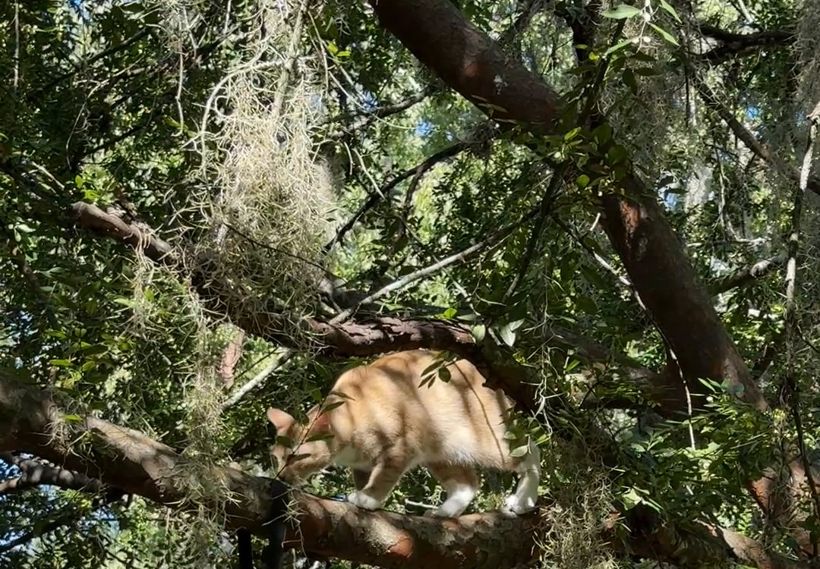
The tree by the fence. Felix likes to climb a large tree in our yard that's about 5 feet from the fence. Neither cat has ever gone over the fence. Still, a tree, shed, or anything else close to a fence line can work as a step up, so it's one of the things worth checking in your own yard. I'll cover it in the cat-proof fence guide, which is coming soon.
Unsupervised time. I leave Felix and Cleo alone out there so they can roam and play. The sources lean the other way, and it's worth knowing exactly where:
- FWC says great horned owls may treat small unattended pets as potential prey, and that staying close to your pets outside, especially at night, prevents this. [9]
- FWC recommends keeping a close eye on pets even in a fenced yard because of raptors. [10]
- FWC notes that coyotes can climb fences and that most coyote attacks on pets happen at night, dusk, or dawn. [4]
- When a cat bites a toad or overheats, the first minutes matter. FWC and Merck both describe fast-moving emergencies. [2][6]
My reading of all that: if your cats are out on their own, the levers that matter most are when they're out (daylight, not dusk, which for our 6:30 PM session means adjusting it seasonally), a fence you check, and ID that will get them home if something goes wrong.
ID, and why collars go missing. Felix recently lost his breakaway collar, which is the collar doing its job: the ASPCA says a cat allowed outdoors should wear a safety collar with an elastic panel so it can break loose if it gets caught on something, plus an ID tag. [15] The trade-off is that collars come off and take the ID tag with them. That's why the ASPCA supports a microchip paired with a collar and personalized ID tag, and notes that a chip only helps if your contact info is current in the microchip registry. [16] Both of ours are chipped. When a breakaway collar goes missing, the fix is simple: put a new one on with a current ID tag, and confirm the microchip registry details while you're at it.
- Breakaway (safety) collars and ID tags: Chewy
- GPS trackers for cats: Tractive · Fi (manufacturer sites, listed for comparison, not a review)
Getting them back inside
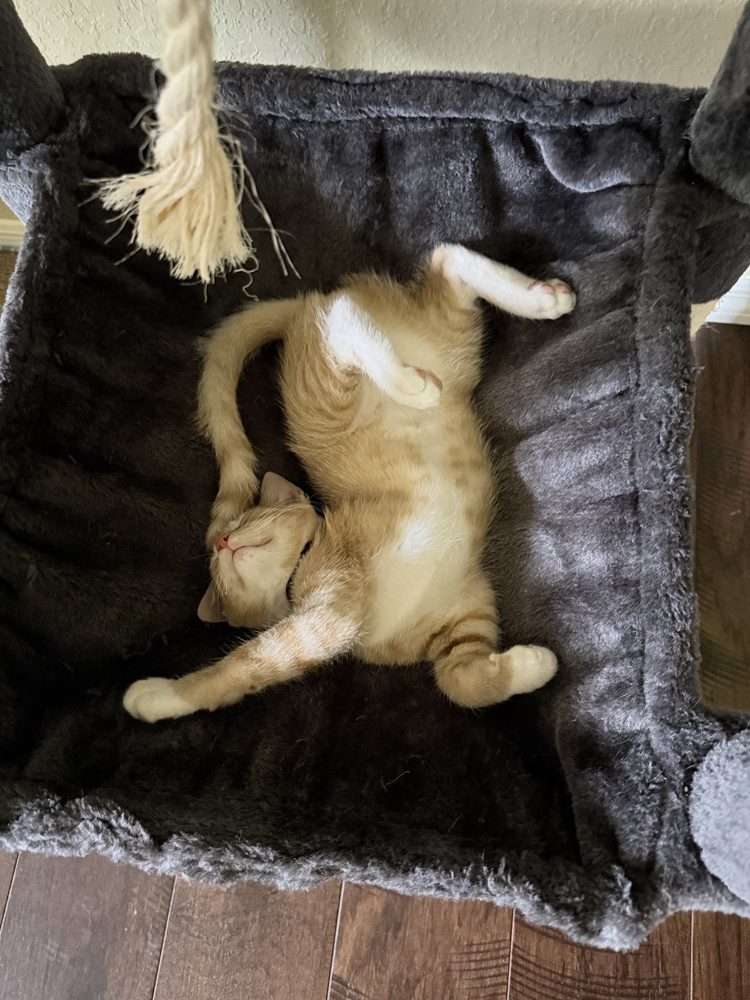
Our two are opposites here. Felix runs in when he's called. Cleo comes in when she wants to, sometimes with a treat as motivation. If your cats are like ours, the recall work is for the Cleo in your house.
The American Veterinary Society of Animal Behavior (AVSAB) suggests a simple way to build a recall: [17]
- Pick a unique recall cue that you only use for this, like "Treats!" or "Here, kitty!", rather than the cat's name, which they hear all the time.
- Say the cue first, then get the treats out. At first, you bring the treat to the cat. The goal is for the cat to learn that the cue predicts something tasty.
- Reward every single time you use the cue.
- Practice a few times a day at random times, then gradually ask the cat to come a short distance and build from there.
Making the treat Cleo already responds to work harder. AVSAB points out that cats quickly learn that a sound, like a treat bag rustling, predicts food. [17] If a treat already brings your cat in sometimes, as it does with Cleo, you can build on that by saying one consistent cue before every treat, so the cue alone starts to mean "treat." Another idea, which is my suggestion rather than AVSAB's, is to end yard time just before a meal so that coming in always pays off. Keep the totals in check: the ASPCA says treats should make up no more than 5–10% of the diet. [15]
Don't use the recall cue to call your cat for something it dislikes, like a bath or a nail trim. Keep recall fun. [19]
A backyard-time checklist
- ☐ In peak summer, go shorter or earlier than 10:30, and skip extreme-heat days. Make sure there's reachable shade and fresh water.
- ☐ Move the evening session earlier in fall and winter so the cats are in by sunset, especially on rainy evenings.
- ☐ Know the heat-stroke signs and Merck's cool-water first aid.
- ☐ Walk the fence line now and then: look for holes at the bottom and anything a coyote could use.
- ☐ Look for trees, sheds, or furniture close to the fence that a cat could use as a step up.
- ☐ Replace lost breakaway collars promptly, keep ID tags current, and confirm microchip registry details.
- ☐ If they're out unsupervised, keep sessions in daylight and check on them before dusk.
- ☐ No pet food left outside, no brush piles, and dump standing water (including old water bowls).
- ☐ Ask the vet about year-round parasite protection (fleas, ticks, heartworm) for an indoor-outdoor cat.
- ☐ Ask the vet about liver fluke screening for lizard hunters. (Ours haven't been tested yet.)
- ☐ Pair treats with one consistent recall cue, and reward every time.
- ☐ Save your vet, the nearest emergency vet, and ASPCA Poison Control, (888) 426-4435, in your phone. [1]
Sources
All sources were accessed and checked on 2026-10-22.
- ASPCA. Hot Weather Safety Tips.
- Merck Veterinary Manual (Pet Owner). What to Do in a Dog or Cat Emergency (Heat Stroke section).
- Merck Veterinary Manual. Protecting Pets During Hot Summer Months (2025).
- Florida Fish and Wildlife Conservation Commission (FWC). Living with Coyotes.
- FWC. Tips for Keeping Cats and Dogs Safe around Wildlife.
- FWC. Cane Toad (Rhinella marina).
- UF/IFAS Extension (EDIS WEC387/UW432). Wilson, A., and S. A. Johnson. The Cane or "Bufo" Toad (Rhinella marina) in Florida.
- FWC. Living with Snakes.
- FWC. Great Horned Owl.
- FWC. Living with Raptors (PDF).
- American Heartworm Society. Heartworm Basics.
- Companion Animal Parasite Council (CAPC). Heartworm (cat guidance) (last updated Jan 14, 2026).
- CAPC. General Guidelines for Dogs and Cats.
- UF/IFAS Solutions for Your Life. Mosquitoes.
- ASPCA. General Cat Care.
- ASPCA. Position Statement on Pet Identification.
- American Veterinary Society of Animal Behavior (AVSAB). 3 Easy Ways to Get Started with Training Your Cat.
- CAPC. Platynosomum fastosum.
- Ontario SPCA. How to Teach a Cat Recall.