Turning a Florida Lanai or Pool Cage into a Catio: Escape Points, Heat, Storms, and Safer Outdoor Time
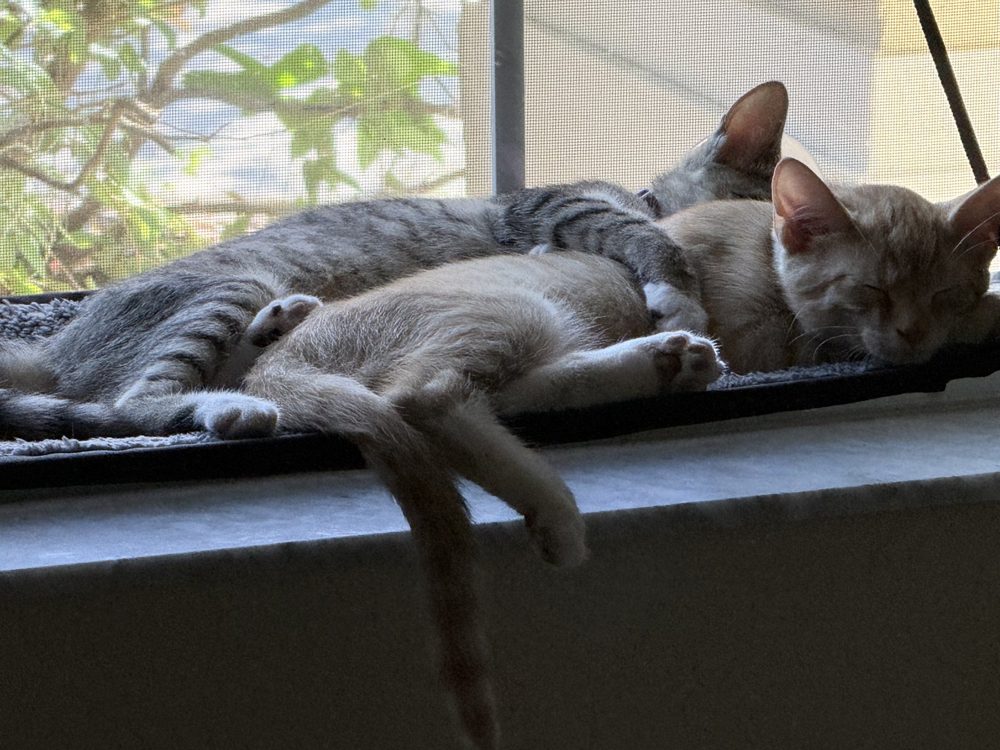
A screened lanai or pool cage is already halfway to a catio: shade, airflow, and a wall of mesh between your cat and the yard. The other half is making sure the enclosure actually keeps the cat in and still works in Florida heat, rain, and hurricane season. This guide is about turning that space into safer outdoor time, not about promising a wildlife-proof room.
What a catio is, and why a lanai is a head start
Humane World for Animals describes a catio (a cat patio) as a screened porch designed to give cats enrichment and a safer way to spend time outdoors. It can be as simple as a window box or as elaborate as a room with a floor, a roof, and furniture. [1] Best Friends Animal Society describes a catio as an outdoor enclosure that lets an indoor cat enjoy fresh air without the same risk of being hit by a car, lost, stolen, or attacked. [3]
International Cat Care says a run attached to the house can give a cat access to both spaces, and that an enclosure can be open at the top with an overhang or fully roofed. [4] A typical Florida lanai or pool cage already has sides and a roof, which is the better starting point if the goal is to stop a climber from going up and over.
FWC advises keeping cats indoors because free-roaming cats are at high risk from coyotes, which have been documented in all 67 Florida counties and can and do prey on domestic cats; most attacks on pets happen at night, dusk, or dawn. [5] The ASPCA also asks owners to keep cats indoors. [7] If you still want outdoor time, a fully enclosed space is a narrower perimeter than an open yard. Our fence guide covers why a six-foot fence alone is not cat containment.
Walk the enclosure like a cat would
Humane World says cats are great climbers and sometimes wily diggers, so a catio should have no openings a cat could squeeze through, even on top, and should avoid anything that might snag a collar. [1] Best Friends says an outdoor catio needs a top to keep cats in and other animals out, and a firm base (hardware cloth at least) to do the same job at ground level. [3] International Cat Care says any people-door into an enclosure should have a security catch that can be locked, especially when cats use an open window or a door from the house. [4]
On a Florida lanai or pool cage, the usual weak points are practical rather than theoretical:
- Torn or sagging screen. UF/IFAS Extension notes that tears or holes in lanai screens can get much bigger in hurricane winds, or the screen can be torn away completely, so screens should be checked before hurricane season. [10] A cat-sized tear is an exit today and a bigger one after the next storm.
- Doors, sliders, and how people actually use them. A door that props open for grilling, a slider that doesn't latch, or a screen door that doesn't self-close is an escape route. If the enclosure opens to the pool deck and the yard beyond, treat every human door as a gate.
- Pet doors. A doggie door from the house into the lanai, or from the lanai into the yard, undoes the enclosure unless you control it.
- Gaps at the floor, corners, and where the cage meets the house. Look along kick-plates, where screen frames meet concrete, and any place soil or pavers have settled. Best Friends' hardware-cloth base is aimed at this kind of gap. [3]
- Roof panels and service openings. Pool cages often have a door for equipment access, a missing spline, or a lifted panel after wind. International Cat Care says to check wiring or mesh regularly for wear and damage. [4]
- Furniture as a launch point. A chair, grill, or stacked float against a weak screen is the lanai version of a tree next to a fence. Our morning and evening backyard-time guide covers the same idea in an open yard.
The ASPCA separately warns that open unscreened windows pose a fall risk and that adjustable screens should be tightly secured. [8] If the cat reaches the lanai through a window, that window still needs a secure screen or sash, and Humane World says you should not cover a bedroom window unless there is another human-sized exit. [2]
Screen, mesh, and what "pet-resistant" actually claims
Standard fiberglass insect screen is built to keep bugs out, not to shrug off claws. Phifer's PetScreen is a pet-resistant insect screen the manufacturer describes as tear- and puncture-resistant to resist damage by most dogs and cats, suitable for patio and porch enclosures as well as windows and doors, with good outward visibility, and not harmful to pets. Standard widths include common replacement sizes, with 25-foot, 50-foot, and 100-foot rolls among the packaged lengths. [13] That is a durability claim about the mesh, not a guarantee that a determined cat cannot push out a loose spline, climb a door frame, or find a gap the screen doesn't cover.
If you replace screen yourself, follow the screen and spline manufacturer's instructions. If the structure is a permitted pool enclosure, ask a screen contractor about matching the existing frame and about any local rules before you change materials. We haven't installed these products ourselves.
- Phifer PetScreen, 36 in x 25 ft, black, model 3025887 (paid link): the manufacturer's pet-resistant vinyl-coated polyester screen in a 36-inch by 25-foot roll, a standard packaged length Phifer lists for this product. Measure your panels; a pool cage usually needs more than one roll, and many owners hire a screen shop for large replacements.
- YARDGARD 1/2-inch galvanized hardware cloth, 36 in x 50 ft (paid link): welded wire mesh of the kind Best Friends describes as a firm catio base, useful along the floor line or any gap you need to close without leaving a cat-sized hole.
- Gardner Bender 8-inch UV-black cable ties, 100 pack (paid link): sold as UV-resistant black ties, for securing mesh or replacing sun-damaged ties on an outdoor enclosure. Florida sun is hard on plastics; inspect ties as part of your regular walk-around.
What to put inside so the space is usable in Florida
Humane World recommends fresh water (especially on warm days), a litter box or easy access back into the house, climbing structures or a hammock, and supervision. It also says cats need ventilation in warm weather and a place to retreat from rain and sun, and that the frame should be strong with every part firmly attached. [1] Best Friends likewise calls for a shady area, sheltered food and water, and a sheltered litter box. [3]
The ASPCA's hot-weather guidance is to provide fresh water and shade, avoid over-exercise, and keep pets indoors when it is extremely hot. Short-nosed cats, older cats, overweight cats, and cats with heart or lung disease are more vulnerable and should be kept cool in air-conditioned rooms as much as possible. The ASPCA also says not to leave pets unsupervised around a pool. [8] A lanai that shares space with a pool is still a pool: keep the house door as the cat's way back to cool air, and do not treat the pool edge as a play area.
A window perch can give indoor viewing time on days that are too hot for the enclosure. K&H describes its EZ Mount Window Bed as a suction-cup window perch with an open top, a washable pad, and cups the company says hold up to 50 pounds; it asks you to measure so the glass pane is at least 27 inches wide and 11 inches high and to clean the glass and cups monthly. [14] Follow those instructions, and do not use a perch as a substitute for a secure screen.
- K&H Pet Products EZ Mount Window Bed (paid link): the suction-cup window perch described on the manufacturer's page. Colors vary by listing; measure the glass and inspect the cups regularly rather than assuming any window will hold it.
If you add wood shelves or a cat tree, International Cat Care says any wood preservative should be non-harmful to cats and fully dry before use. [4] Check hanging baskets against our yard-plant guide before they move onto the lanai.
A screen is not a wildlife shield by default
Humane World says that where coyotes, bears, or other large predators are present, a catio may not be the right choice unless it is extremely sturdy, and it tells owners to supervise the cat in the catio. [1] FWC's Living with Bobcats flyer is more specific for Florida: do not leave small domestic pets outdoors or on screened enclosures unattended. [6] FWC also says coyotes can climb fences and recommends a yard fence at least 6 feet high with the bottom checked for holes if pets use a fenced yard. [5]
Mesh size also decides how much of Florida's smaller wildlife can come in. CAPC says the liver fluke Platynosomum (often called lizard poisoning) is a parasite of cats in Florida and other parts of the southeastern United States, and that cats should not be allowed to hunt, so they do not eat lizards, toads, geckos, or other intermediate hosts. [9] A lanai with torn screen, an open door, or gaps at the floor can still let anoles in. That is our reading of how the enclosure and the parasite advice fit together, not a CAPC statement about screen mesh. Our lizards, liver flukes, and cane toads guide covers the health side.
FWC separately advises against leaving pet food unattended outside and against letting pets roam at the edge of ponds, lakes, or other fresh or brackish water because of alligators. [12] Don't store outdoor cat food on the lanai, and don't treat a lakeside cage as a reason to relax those rules.
Heat, daily storms, and hurricane season
The Atlantic hurricane season runs from June 1 to November 30. [11] UF/IFAS Extension's 2026 season preview makes the same calendar point and says to bring in or secure loose yard items and to check lanai screens for tears before the wind arrives. After furniture is moved inside, it says to close and lock the doors. [10] UF/IFAS Gardening Solutions likewise says to move patio furniture and other loose objects to a sheltered area when a hurricane is coming. [15]
Our takeaways, not official rules: cats belong indoors well before a named storm, not in the lanai. Afterward, walk the cage for missing panels, popped spline, new gaps, and debris before anyone goes back out. Our hurricane go-kit guide covers carriers, records, and evacuation planning.
HOAs, permits, and fire safety
Humane World says to be aware of zoning and fire-safety regulations, and not to block a bedroom window unless there is another human-sized way out. [2] International Cat Care notes that some housing developments have covenants or local restrictions. [4] In Florida, section 720.3035 of the Florida Statutes limits an HOA's architectural review to what is stated in, or reasonably inferred from, the declaration of covenants or published guidelines, and requires a written explanation if the association denies an application. [16] That is not legal advice. Read your own documents before you change visible screening, add a cat door, or build onto the cage.
Introducing the cats
Humane World suggests picking a quiet time, letting the cat explore at its own pace, and using treats or catnip if the cat is hesitant. [1] Stay out there for the first sessions and watch how your cat tests doors, corners, and furniture. If a recall cue already works in the house, practice it on the lanai too; our backyard-time guide has the recall basics we use with Felix and Cleo.
Lanai and catio checklist
- ☐ Walk every screen panel, door, and floor gap. Repair tears and reset loose spline before the cats go out.
- ☐ Confirm every human door latches, and that any pet door cannot dump a cat into the open yard.
- ☐ If the enclosure has no firm floor, close gaps with hardware cloth or another solid barrier so a cat cannot squeeze under. [3]
- ☐ Provide shade, fresh water, and a way back into cool indoor air. On extreme-heat days, keep cats inside. [8]
- ☐ Keep a litter box in the enclosure or guaranteed access to the house. [1]
- ☐ Do not leave cats unattended on a screened enclosure. [6]
- ☐ Breakaway collars and current ID tags are on, and the microchip registry has your current phone number. [7]
- ☐ No outdoor food left out, and no lake or pond access from the enclosure. [12]
- ☐ Before hurricane season and before a named storm: inspect screens, bring in loose furniture, and keep cats indoors. [10]
- ☐ After every storm, re-inspect the cage before anyone goes back out.
Sources
All sources were accessed and checked on 2026-11-09.
- Humane World for Animals. Catios: Safe Outdoor Enclosures for Cats.
- Humane World for Animals. How to Buy the Perfect Catio for Your Cat.
- Best Friends Animal Society. Outdoor Catio Ideas: What You Need to Know.
- International Cat Care. Fencing in Your Garden to Keep Your Cat Safe.
- Florida Fish and Wildlife Conservation Commission (FWC). Living with Coyotes.
- FWC. Living with Bobcats (PDF).
- ASPCA. General Cat Care.
- ASPCA. Hot Weather Safety Tips.
- Companion Animal Parasite Council (CAPC). Platynosomum fastosum.
- UF/IFAS Extension Orange County. Hurricane Season Begins June 1: Time to Prepare (2026).
- National Hurricane Center (NOAA). Tropical Cyclone Climatology.
- FWC. Tips for Keeping Cats and Dogs Safe around Wildlife.
- Phifer Incorporated. PetScreen: Dog & Cat Resistant Screening.
- K&H Pet Products. K&H EZ Mount Window Bed.
- UF/IFAS Gardening Solutions. Hurricane Landscaping.
- The Florida Legislature. Florida Statutes § 720.3035.